



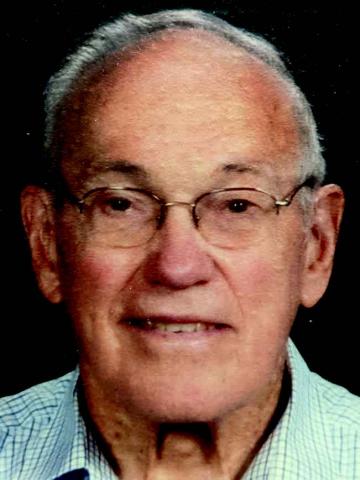
By Jacob Boyko, SDREA
Warren Thomas was three weeks into his second year of teaching in 1951 when he got a letter in the mail. The sixth grade teacher from Mitchell, S.D., had just married his wife, Luella, that June. Now, he was being drafted to war in Korea. “I was not happy,” Thomas, 97, said.
“When you've been married three months, well, you just expect to be able
to settle down and get on with your career.”
When the draft notice came, the Mitchell superintendent asked the draft board in Woonsocket to at least allow Thomas to finish the semester. The request was denied; Thomas wasn’t a farmer, rancher or other worker eligible for an occupational deferment.
“I was just a teacher,” he recalled. “And they said anybody could be a teacher.”
Less than a month later, he said his goodbye to Luella. The 22 year old was taken to Fort Sill, Okla., for eight weeks of basic training. After passing that, the men boarded the troop ship and awaited their next stop in Korea.
In April of 1952, Thomas was brought to an army base near the town Kumwha, in present day north-central South Korea near the Korean Demilitarized Zone (DMZ).
Being the only college-educated soldier in the75th Field Artillery, Thomas was assigned the duties of battery clerk, which included administrative and clerical work for the unit. He described the work as routine.
“I don't claim to be a hero because I had a desk job due to my education experience,” he said. “At the time I rrived in Korea, the front lines had been pretty well established.”
One of Thomas’ many duties included fire direction, requiring him to help direct the firing of his unit’s artillery.
“We were firing our big guns on the Chinese and the North Koreans, but we couldn’t get them dug out so we were in that one position,” he recalled. “We fired against them and they fired against us … [They used] slave communist labor, and they dug back in the caves in the mountains, and we could see them – We were only about three miles apart in our
rather static positions.”
Soldiers earned points toward returning home based on their assignments, Thomas explained. Frontline infantrymen earned four points a month, reaching the required 36 points in nine months. Thomas earned three points a month in his position farther behind the lines, keeping him in Korea for a year.
Due to the stalemate, Thomas would remain in that one location. He bunked in a dugout he and a fellow soldier excavated from a hillside, counting the days before he could return home. During this period, Thomas relied on two things: his Chrsitian faith and letters from Luella.
“We wrote every day,” he recalled. “I had a lot of college friends, some teaching friends and some relatives too, which a lot of the guys didn’t have. During the 366 days I was on Korean soil, I received just about 500 letters by airmail.”
After his military service, the couple taught school in Seattle before returning to South Dakota in 1954 to help his father on the farm. They moved into a farmhouse without running water or indoor plumbing, but Thomas was familiar with life without modern conveniences. Growing up, his family didn’t get electricity until 1948 when Intercounty Electric Cooperative electrified rural Sanborn County.
Today, at age 97, Thomas lives on land north of Forestburg close to where he grew up decades ago without electricity.
The couple raised two sons, Kevin and Lyndon. Warren continued his career in education, becoming principal at Alpena High School and earning a master’s degree in education from South Dakota State University. He retired in 1993 as principal of the Mt. Vernon Elementary School after more than 30 years in the profession.
He and Luella shared nearly 68 years of marriage before her passing in 2019.
Today, Thomas still takes opportunities to get out and learn. He has joined four Central Electric Cooperative tours of member-owned power generation facilities in North Dakota.
His memories span a childhood without electricity, a career in classrooms and a year of military service far from home. But the subject of Korea isn’t one he brings up often.
“War is not good,” Thomas said. “I didn't have any idea whether I'd be coming back or not because a lot of GIs were being killed in Korea. But I did survive, obviously.”